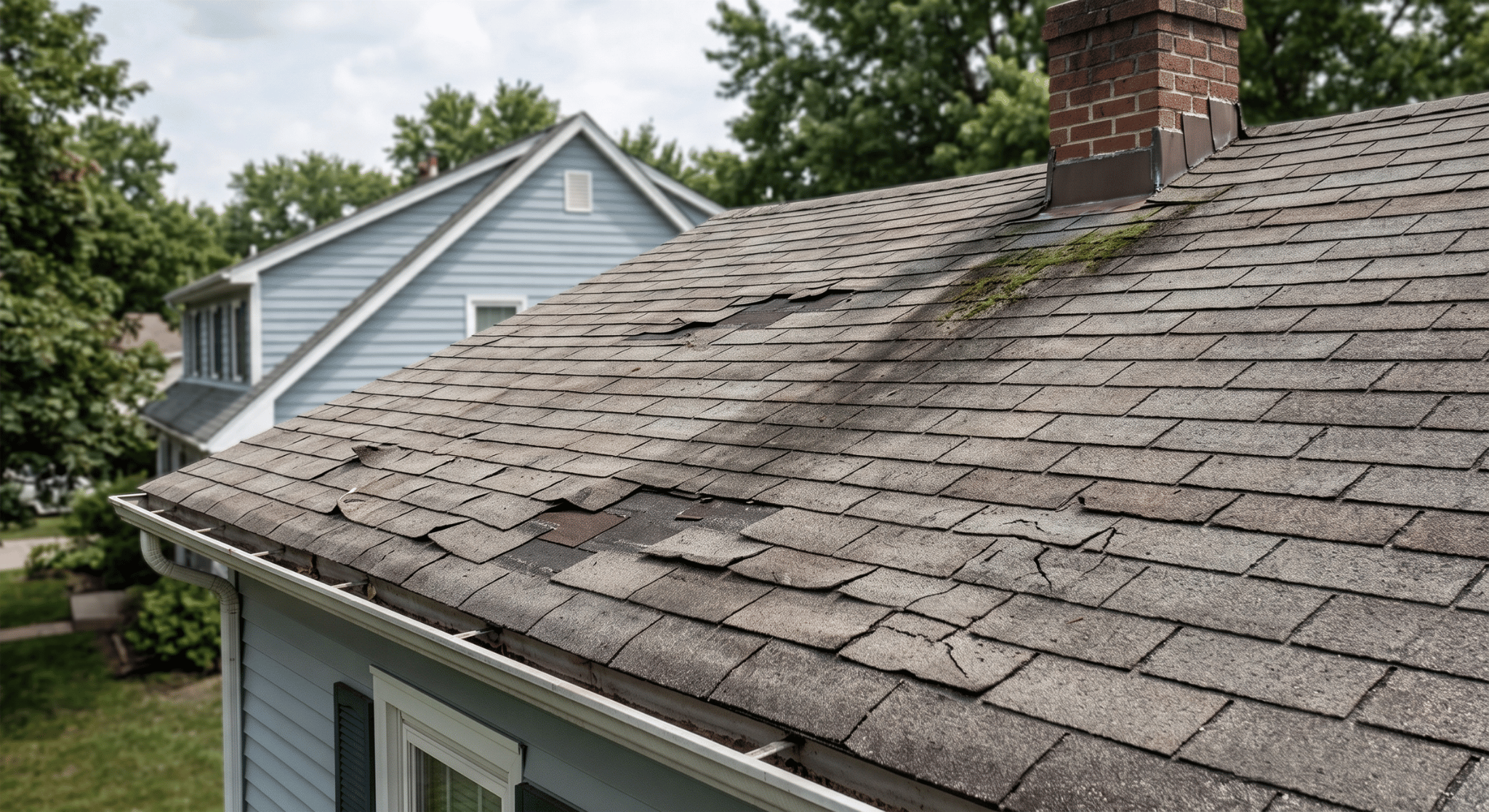
Your roof doesn't usually fail overnight.
In many cases, it gives you warning signs long before a serious leak or structural problem develops. The challenge is knowing which signs are simply cosmetic and which ones indicate that your roofing system may be approaching the end of its useful life.
For homeowners, recognizing those warning signs early can mean the difference between addressing a manageable roofing problem and dealing with much more extensive damage.
Here are seven signs that it's time to have your roof professionally evaluated.
1. Your Shingles Are Curling or Buckling
Take a look at your roof from the ground.
If shingles are curling at the edges, buckling in the middle, or appearing visibly distorted, they may be deteriorating.
Shingles are designed to create a continuous protective layer over your home. When they begin losing their shape, their ability to shed water effectively can be compromised.
A few damaged shingles don't automatically mean you need an entirely new roof. But widespread curling or buckling is worth a professional assessment.
2. You're Finding Shingle Granules in Your Gutters
Those tiny, sand-like particles you occasionally find in your gutters may be coming from your roof.
As asphalt shingles age, they naturally lose some granules. Significant granule loss, however, can indicate that the protective surface of the shingles is deteriorating.
You may also notice areas of the roof that appear unusually smooth or discolored.
If you're seeing a noticeable increase in granules around your gutters and downspouts, it's worth taking a closer look at the roof.
3. You Have Missing or Damaged Shingles
Missing shingles leave portions of your roofing system exposed to the elements.
Strong winds, falling branches, and severe weather can all contribute to shingle damage.
After a major storm, it's particularly important to look for:
- Missing shingles
- Cracked shingles
- Lifted shingles
- Exposed roofing material
- Damaged flashing
- Debris on the roof
Not every instance of damage requires a complete replacement. In some cases, repairs are enough.
The important thing is determining the extent of the problem.
4. You Notice Water Stains Inside Your Home
Don't ignore a water stain on your ceiling.
Brown or yellow discoloration, peeling paint, bubbling drywall or damp areas can all indicate that moisture is getting somewhere it shouldn't.
And while a roof leak may be the culprit, the visible stain isn't necessarily directly beneath the source. Water can travel through roofing materials and structural components before appearing inside the home.
That's why simply painting over the stain isn't a solution.
You need to identify the underlying source.
5. Your Roof Is Sagging
A healthy roof should maintain a consistent shape and structural line.
If you notice an area that appears to dip, sag or bow, it deserves immediate professional attention.
Sagging can be associated with moisture intrusion, deterioration of underlying materials, or other structural problems.
This is one of those situations where it's better to investigate early rather than wait for the problem to become more serious.
6. Your Roof Has Been Through Significant Weather Damage
Severe weather can leave behind damage that isn't immediately obvious from the ground.
After a significant storm, homeowners should inspect their roof and surrounding property.
Look for:
- Fallen branches
- Missing shingles
- Damaged flashing
- Visible cracks
- Loose roofing materials
- Water intrusion
Even if your roof appears fine from the driveway, a professional inspection can identify damage that isn't readily visible.
This is particularly important after storms involving high winds or heavy rainfall.
7. You're Continually Repairing an Aging Roof
One repair doesn't necessarily mean it's time for a replacement.
But if you're repeatedly repairing different areas of an aging roof, it's worth stepping back and looking at the bigger picture.
At some point, continuing to repair isolated problems may no longer be the most sensible long-term approach.
A roofing professional can assess the overall condition of the system and help you understand whether continued repairs or replacement makes more sense.
Roof Repair or Replacement: Which Do You Need?
This is one of the most common questions homeowners have.
The answer depends on the condition of the entire roofing system.
A professional will typically consider:
- The extent of the damage
- The age of the roof
- Previous repairs
- Condition of the shingles
- Signs of moisture intrusion
- Condition of underlying materials
- Overall remaining service life
A localized problem may be completely manageable with a repair.
Widespread deterioration, however, may indicate that replacement is the better long-term solution.
The goal shouldn't be to sell you the biggest project.
It should be to determine what your home actually needs.
Don't Wait for a Leak to Tell You Something Is Wrong
Your roof protects virtually everything beneath it.
If you've noticed damaged shingles, recurring leaks, visible deterioration or other warning signs, having the roof evaluated can give you a much clearer picture of its condition.
Hip & Valley provides roofing and exterior services for homeowners throughout the Chattanooga area and surrounding communities.
Need to understand what's happening with your roof?