Siding is one of the first things people notice about a house.
It can completely change a property's appearance, but its job goes well beyond curb appeal. Your siding is an important part of your home's exterior envelope, helping protect the structure from weather while giving the property a finished look.
If your current siding is faded, cracked, warped, or simply no longer fits the look you're after, replacing it can be one of the most noticeable improvements you make to your home's exterior.
But which material is right for you?
The answer depends on several factors, including your home's design, maintenance preferences, budget, desired appearance, and expectations for long-term performance.
Let's look at some of the most common options.
What Should You Consider Before Choosing Siding?
Before comparing individual materials, think about what you actually want from your new siding.
Appearance
Your siding covers a large portion of your home's exterior, so color, texture and profile can dramatically affect the overall character of the property.
Some homeowners prefer the clean appearance of traditional horizontal siding. Others may prefer a more distinctive board-and-batten or wood-inspired look.
The best choice should complement the home's architecture rather than simply follow a current trend.
Durability
Your siding has to live outside year after year.
Rain, sunlight, wind, temperature changes, and everyday impacts can all take their toll.
Different materials have different performance characteristics, so consider durability alongside appearance.
Maintenance
How much time do you want to spend maintaining the exterior?
Some siding materials require relatively little routine maintenance, while others may require periodic painting, sealing, or additional care.
Long-Term Value
The lowest initial price isn't necessarily the lowest overall cost.
When comparing options, consider installation, maintenance, potential repairs, and expected service life.
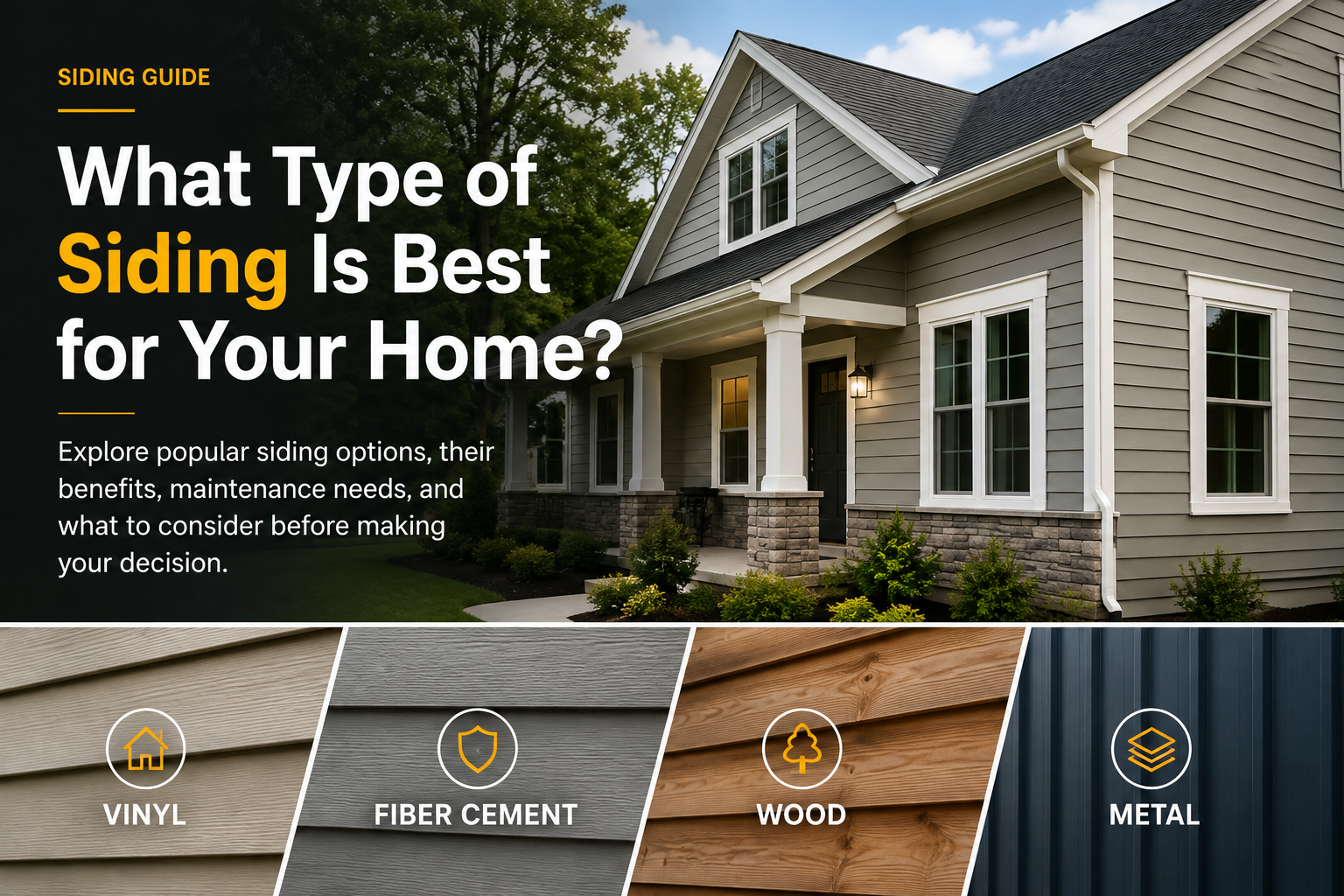
Vinyl Siding
Vinyl siding remains a popular choice because it offers a practical combination of appearance, versatility and relatively low maintenance.
Modern vinyl siding is available in a wide range of colors, textures and profiles, allowing homeowners to achieve everything from a traditional appearance to a more contemporary exterior.
Potential advantages include:
- Wide variety of colors and styles
- Relatively low routine maintenance
- Easy to clean
- Versatile appearance
- Generally accessible price points
Vinyl can be a sensible option for homeowners looking to refresh an aging exterior without taking on a high-maintenance material.
However, product quality and installation still matter.
A good material installed poorly can create problems, so the contractor you choose is an important part of the equation.
Fiber Cement Siding
Fiber cement siding has become another popular choice for homeowners looking for a durable exterior with a substantial, traditional appearance.
It can be manufactured to replicate the look of painted wood while offering different maintenance and performance characteristics.
Fiber cement may be worth considering if you want:
- A premium appearance
- Wood-inspired textures
- Multiple design options
- Strong exterior durability
- A long-term siding solution
Installation is particularly important with fiber cement because the material has specific handling and installation requirements.
If you're considering it, make sure the contractor you hire understands the product rather than simply treating it like conventional siding.
Wood Siding
Wood siding has remained popular for generations for a reason.
Natural wood has a character and texture that's difficult to reproduce perfectly with manufactured materials.
It can work particularly well with traditional, craftsman, and other architectural styles.
The tradeoff is maintenance.
Wood siding may require periodic attention to help protect it from moisture, weathering, and deterioration.
For homeowners who love the appearance of natural materials and are comfortable with the maintenance involved, wood can still be an excellent choice.
Engineered Wood Siding
Engineered wood siding is another option for homeowners who like the look of wood but want an alternative to traditional wood siding.
It is manufactured using engineered wood products and is available in a variety of profiles and finishes.
Depending on the product, it can provide a convincing wood appearance while offering different maintenance and durability characteristics.
As with any siding material, homeowners should review the manufacturer's specifications and warranty requirements before deciding.
How Do You Know When It's Time to Replace Your Siding?
Sometimes the need for replacement is obvious.
Other times, deterioration happens gradually.
Keep an eye out for:
- Cracked or broken panels
- Warping or buckling
- Rot or deterioration
- Loose sections
- Visible gaps
- Moisture damage
- Persistent fading
- Peeling or deteriorating finishes
- Increasing maintenance requirements
One damaged section doesn't necessarily mean the entire exterior needs replacement.
In some situations, a repair may be appropriate.
If deterioration is widespread, however, replacement may provide a more practical long-term solution.
That's where a professional assessment can help.
What About Energy Efficiency?
Siding can affect the overall performance of your home's exterior, but it's important not to view siding as a standalone energy solution.
Your home's insulation, air sealing, windows, doors, roofing and ventilation all contribute to its overall efficiency.
That's why homeowners considering a major exterior renovation should think about the entire building envelope rather than focusing on one component in isolation.
If you're already considering several exterior improvements, you may want to explore our exterior remodeling services to see how different projects can work together.
Should You Replace Your Siding and Roof at the Same Time?
Not necessarily.
If your roof is in good condition, there may be no reason to replace it simply because you're replacing the siding.
On the other hand, if both systems are aging or showing signs of deterioration, coordinating the projects may make sense.
If you're unsure about your roof's condition, our guide to 7 Signs You May Need a Roof Replacement can help you spot warning signs.
The important thing is to evaluate each component based on its actual condition.
Don't Forget the Gutters
Another exterior component that's easy to overlook when replacing siding is your gutters.
Gutters direct water away from the home, and their position and condition can affect how effectively rainwater is managed around the property.
If you're replacing siding, it's worth checking whether your existing gutter system is still functioning properly.
If you're interested in understanding how gutters fit into your home's exterior protection, we've also put together 7 Things Homeowners Should Know About Gutters.
So, Which Siding Is Best?
There isn't one universal answer.
The right choice depends on your:
- Home's architectural style
- Desired appearance
- Maintenance preferences
- Budget
- Long-term plans
- Performance expectations
The best siding project starts with understanding those priorities before choosing a material.
At Hip & Valley, we help homeowners improve and protect their homes through roofing and exterior remodeling services.
Explore our siding services to learn more about our approach to exterior improvements.
For local roofing and exterior service information, explore our Chattanooga service area.
Ready for a Better-Looking Exterior?
If your siding is showing its age or you're simply ready for a change, we'd be happy to discuss your options.
Let's find an exterior solution that makes sense for your home, your priorities and your budget.
What is the most popular type of siding?
Vinyl siding is popular because of its variety of styles, relatively low maintenance needs, and broad range of price points. However, the best material depends on the home's design and the homeowner's priorities.
How often should house siding be replaced?
No single replacement interval applies to every siding material. Age, installation quality, climate, maintenance, and visible deterioration all affect how long siding remains in good condition.
Is it better to repair or replace siding?
Minor, isolated damage may be repairable. Widespread cracking, warping, rot or deterioration may make replacement the more practical option.
Does new siding improve curb appeal?
Yes. Because siding covers such a large portion of a home's exterior, changing its color, material, or profile can make a significant difference in appearance.