Roof Assessment Photos: How to Connect Each Finding to the Next Decision
Use roof assessment photos well: ask where each finding is, what it shows, what remains uncertain and how it supports a repair or replacement recommendation.
November 13, 2026
Stephen Igwebuike
A useful roof assessment photo should answer three questions: where is this, what does the contractor observe, and what decision does it support? Read the photographs with the written findings, access limits and proposed scope. A striking close-up alone cannot establish the condition of the whole roof or prove that replacement is the right answer.
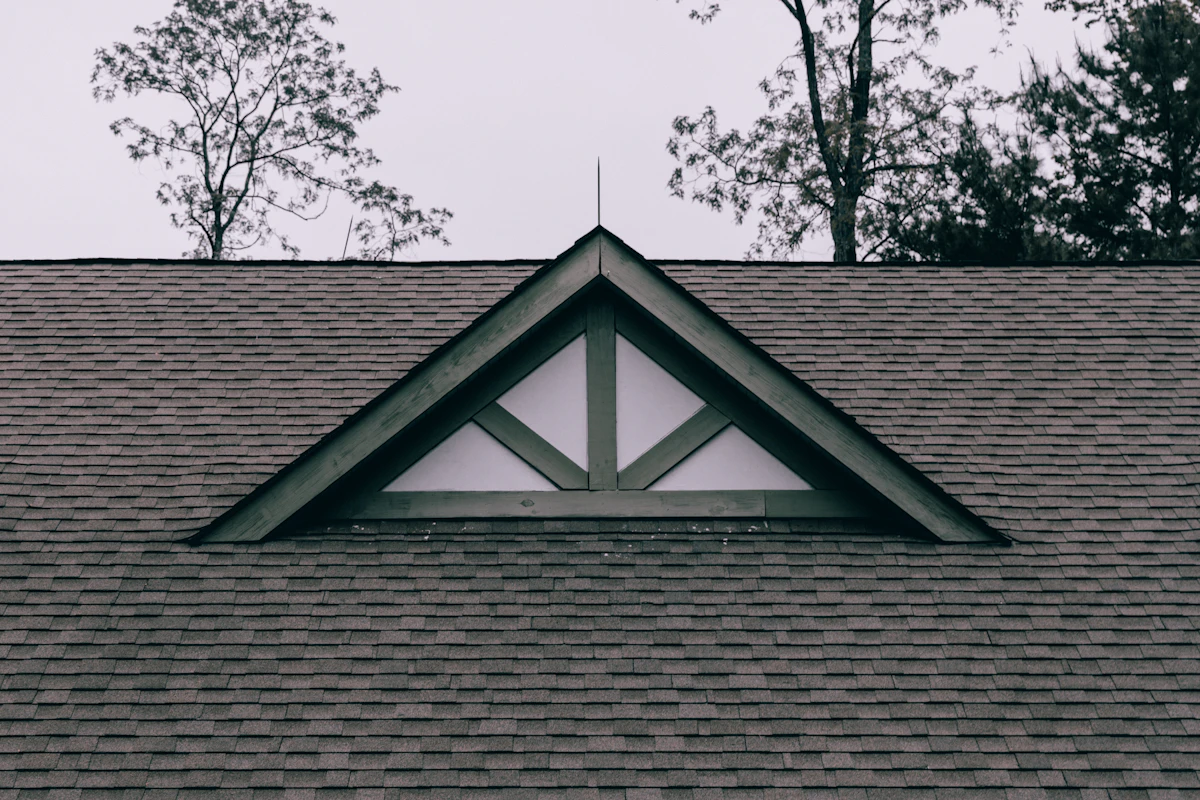
Illustrative shingle-roof detail. A useful report connects close views to an overview and written findings. Photo: Yucel M / Unsplash.
Owners do not need to become roofers to ask for understandable evidence. You should be able to connect the overview of your roof, the detailed observations and the recommended next step without guessing which part of the building a photograph shows.
Start with the overview
Ask the assessor to identify the relevant slope, edge, valley or roof penetration before interpreting a close-up. An overview photograph, marked plan or clear location reference helps make that connection.
Then confirm the date and scope of the visit. Was the roof assessed from the ground, from accessible positions, with aerial images or by another method? Which areas could not be assessed? Different viewpoints provide different information, and none should quietly be described as a complete investigation of concealed components.
Read one finding from context to recommendation
A practical photo record can follow this sequence. It is an example of how to organize information, not a statement that every assessment uses the same format:
Context: an overview establishes the part of the roof.
Detail: a closer image shows the condition being discussed.
Explanation: the written note distinguishes an observation from a possible cause.
Limit: the assessor explains what cannot be confirmed from that view.
Action: the recommendation identifies further assessment, maintenance, repair or replacement scope.
The NRCA Roof Deck Integrity Assessment Tool includes dated photographs or video records and notes identifying conditions and locations. Those records help keep evidence connected to the area assessed. Hip & Valley’s roof inspection service describes photo documentation and practical recommendations. Ask what documentation will be supplied for your actual assessment.
Use an illustrative caption to test the explanation
Illustrative example—not an actual Hip & Valley project finding: a close-up shows a roof-to-wall junction. A caption saying only “bad flashing” does not explain the extent of the observation or proposed work.
A more useful discussion identifies the junction, explains what the contractor observed, states what remains concealed and connects the recommendation to the quoted area. It should also explain whether additional access or assessment could change the scope.
That does not require a promise that every hidden condition is known. It requires a clear account of what the assessment supports and where uncertainty remains.
Ask how the photographs support repair or replacement
If a localized repair is recommended, ask which finding it addresses and which areas the work excludes. If replacement is recommended, ask how the overall condition and available evidence support that broader scope.
Several close-ups of one area should not be mistaken for evidence from several different roof areas. Ask for the location references so you can understand the distribution of the observations. Conversely, one acceptable-looking section cannot establish that the entire roof has no concerns.
Our guide to different roofing recommendations can help when two proposals reach different conclusions. Compare the inspected areas, evidence, limitations and proposed work before comparing the totals.
Keep the inside and outside observations connected
If there is an interior leak concern, provide a safely taken photograph, its room location and when it was noticed. Tell the contractor about available repair records and the circumstances you observed. Do not assume the roof opening, if one exists, is directly above the interior mark.
Ask the professional what assessment is needed to investigate the relationship. Photos are useful communication tools, but they do not replace a site-specific diagnosis. For a current leak concern, discuss roof leak assessment and repair rather than relying on a distant image review.
Keep a record that will help later
Save the dated findings, location references, agreed scope and available completion photos together. Ask what was repaired, what was excluded and what should be monitored or maintained. Share only the property information needed for the work.
Take your own supporting photographs from safe, accessible positions. Let appropriately equipped professionals handle roof access; an extra image is not a reason to climb onto a roof.
Questions about roof photographs
Can you diagnose a roof from a single photo?
A photo may help explain a concern, but a single image is not a complete roof assessment. The professional needs context, access information and any additional investigation appropriate to the question.
Does an aerial image show hidden damage?
It cannot establish every concealed condition. Ask the assessor what the method can show and what remains outside the assessment.
Do photographs guarantee an insurance outcome?
No. Keep factual records and ask the insurer about its own requirements. A contractor’s photo record does not establish coverage or approval.
Ask for an assessment you can follow
Contact Hip & Valley Roofing with your property address, concern and available records. The team can confirm coverage in Chattanooga and surrounding Southeast Tennessee communities and discuss the appropriate assessment. Sending a photo starts a conversation; it does not confirm a diagnosis, price or appointment.
Complete the form below to start your roofing or exterior quote.
Related Roofing & Exterior Resources
Continue Your Research
Use these related service and location pages to move from general homeowner guidance to the specific Hip and Valley solutions available in Chattanooga and surrounding communities.